Calgary bylaws and property lines
The City of Calgary has specific regulations around fence height, setbacks from the property line, and sightline requirements near corner lots and back alleys. A fence built in the wrong location — even by a metre — can result in a bylaw complaint from a neighbour or, in worse cases, a demand to relocate it at your own expense. Before a single post goes in the ground, the property line needs to be confirmed. A professional installer knows to pull that information before starting, not after.
Permits are occasionally required depending on fence height and location, and navigating that process correctly the first time saves headaches down the road. It's the kind of detail that's easy to miss if you're focused on materials and measurements.
Frost heave and proper post setting
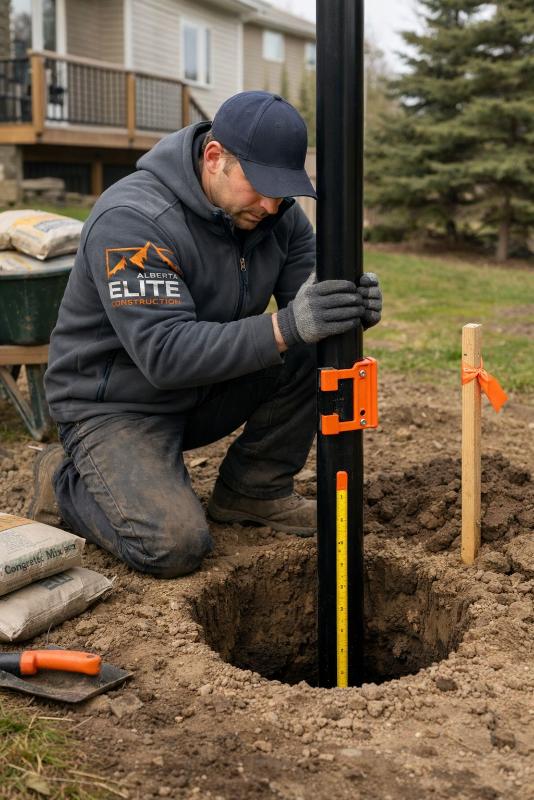
This is the big one for Calgary. Frost heave — the upward movement of soil as ground water freezes and expands — is responsible for more fence failures here than rot, wind, or poor-quality materials combined. Posts that aren't set deep enough, or that aren't properly anchored below the frost line (typically around 1.2 metres in this area), will shift, lean, and eventually fail as the seasons cycle.
Proper post setting means digging to the right depth, using the right concrete mix for cold-climate applications, and allowing it to cure correctly before the fence panels go on. It's a step that's easy to shortcut and expensive to redo.
Gate alignment and long-term function
A gate that's installed slightly off-plumb works fine on day one. Six months of freeze-thaw cycles later, it sticks, sags, or won't latch properly. Gate installation requires attention to post spacing, hinge placement, and hardware quality — the kind of details that an experienced installer gets right the first time and a rushed DIY job often doesn't.
Our professional fence installation in Calgary team sets posts to the correct frost depth, confirms property lines before breaking ground, and handles permit requirements when needed. It's not just about putting boards in the ground — it's about making sure the fence is still standing straight in five years.