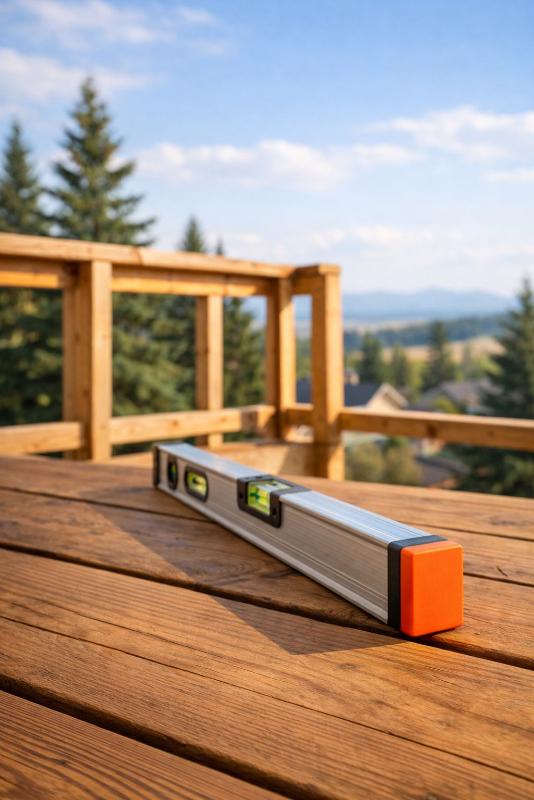
There's a reason pressure-treated lumber has been the go-to choice for Calgary homeowners for decades. The upfront cost is genuinely lower—sometimes significantly so—compared to synthetic alternatives, and if you're working with a tighter budget, that margin matters. A well-built traditional wood deck can look stunning, especially in the first few years. There's warmth to natural grain that no synthetic product has fully replicated, and for a lot of people, that's non-negotiable.
Calgary's dry climate is actually one of the better environments for wood decking, if it's maintained properly. We get far less sustained humidity than, say, Vancouver, which means the conditions for wood rot are less severe. That said—and I want to be straight with you here—the intense UV exposure in our high-altitude summers, combined with the dramatic seasonal temperature swings, will push untreated or poorly sealed wood to warp, crack, and grey out faster than you'd expect. Plan on staining and sealing every one to two years. If that feels like a chore you'll happily do, traditional lumber is a perfectly strong choice.
On top of that, the treatment chemicals in modern lumber require specific stainless steel or hot-dipped galvanized fasteners. It's a small detail that gets skipped all the time in DIY builds—and it leads to ugly black streaking and corroded connections within a couple of seasons.
Composite decking has come a long way. The early versions from the late '90s and early 2000s had a reputation for fading, staining, and looking vaguely like plastic. Today's products—especially the capped composites from the better manufacturers—are genuinely impressive. They resist moisture, they don't splinter, and they won't rot when snow melt sits on them through a muddy April thaw.
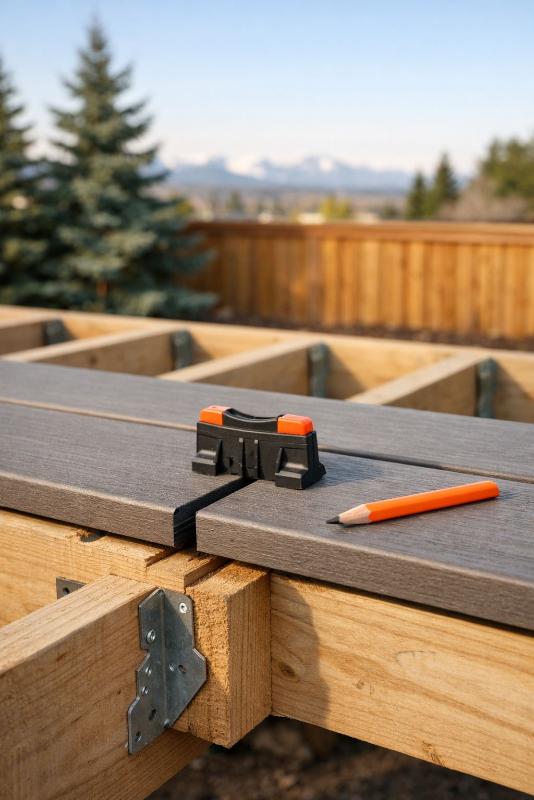
But here's where Calgary throws a wrench in the works: synthetic boards expand and contract with temperature changes, and our swings are extreme. A dark-coloured composite board sitting in direct July sun can reach surface temperatures well above the air temperature—hot enough to be uncomfortable on bare feet. And in winter, those same boards contract significantly. If the deck framing isn't spaced and installed correctly to account for that movement, you'll end up with boards that buckle in summer or gaps that grow wide enough to catch a heel in winter. This is one area where installation quality is absolutely everything.
The other honest conversation to have about modern synthetic boards is cost. The upfront investment is meaningfully higher than traditional lumber—sometimes double. What you're buying is time. Over a 20-year span, the math often evens out or even tips in favour of low-maintenance materials when you factor in staining products, annual labour, and the occasional board replacement. But the initial cheque is bigger, and that's a real consideration.
"The hidden variable in any deck project isn't the material sitting on top—it's what's happening below grade. Get the footings wrong, and neither wood nor composite will save you."
Look, I've been building decks in Calgary for years, and the most important thing I can tell you is this: the material is almost secondary to the installation. I've seen expensive composite decks fail in under five years because the framing was undersized or the footings weren't dug below the frost line. And I've seen modest lumber decks that are rock-solid twenty years later because someone built the structure properly from the ground up.
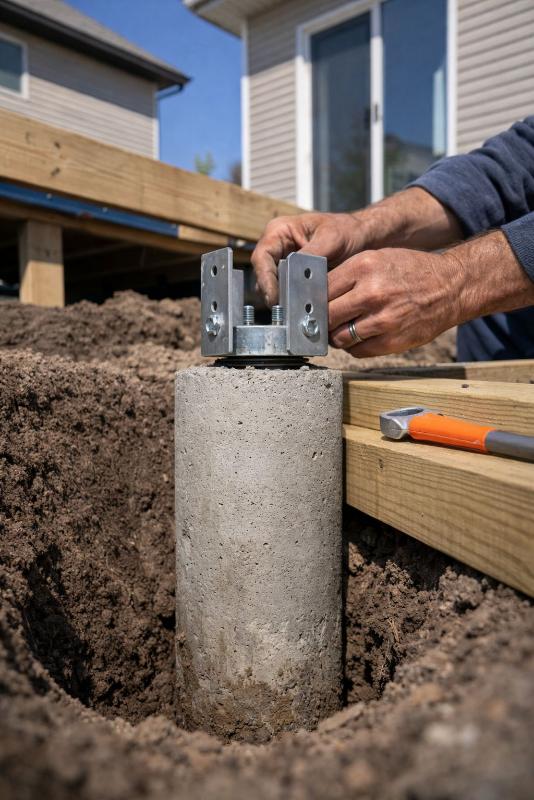
Calgary's clay-heavy soil shifts with every freeze-thaw cycle. If your deck footings aren't set deep enough—below the 1.2-metre frost line that our climate demands—the whole structure will heave and settle unevenly over time. Boards crack. Ledger connections pull away from the house. Railings go wobbly. None of that is a material failure; it's a foundation failure.
When we build a deck for a client in Calgary, we focus on the structure you can't see—the footings below the frost line, the proper flashing where the deck meets the house, the joist spacing that gives the boards the support they need. That's what separates a deck that lasts 5 years from one that lasts 25. The surface boards are almost the easy part.
There's also the matter of Calgary's building permits and setback requirements. A deck over a certain size triggers a permit, and a permitted deck requires inspections. Getting that process right—knowing what the City of Calgary expects in terms of drawings, structural specs, and inspections—is something an experienced local contractor handles as a matter of routine. For a first-time builder, it can be a real headache.
Of course, you can do this yourself if you're handy and patient. But the cost of getting it wrong—whether that's a failed inspection, a deck that needs to be partially torn down and rebuilt, or a structure that develops problems five years from now—adds up quickly. The savings on labour rarely survive contact with a mistake.
Here's how I usually frame it for people who are still on the fence. If you love the look of natural wood, enjoy a bit of seasonal upkeep, and want to keep the initial cost lower—traditional treated lumber, installed properly, will serve you well in Calgary. It's not the wrong choice. It's just a choice that comes with ongoing responsibilities.
If you'd rather spend your Saturday mornings having coffee on the deck instead of sanding and sealing it, and if you're thinking long-term about resale value and maintenance costs, then a quality composite material is probably a better fit. Pay more now, spend less time maintaining it later.
Either way—and I mean this genuinely—the material choice matters less than finding someone who knows how to build for Calgary's specific conditions. The frost line requirements, the soil movement, the UV exposure, the proper drainage slope away from the house. That's the knowledge that actually protects your investment.
If you're still weighing your options and want to look at actual samples side by side, we're happy to walk you through it. Our team offers consultations with no pressure—just an honest conversation about what makes sense for your home, your budget, and your neighbourhood. Check out our professional deck installation services to learn more about how we approach every project, or give us a call and we'll come out to take a look at the space.
The right deck, built the right way, adds years of real enjoyment to your home. Calgary's weather will test it—but it doesn't have to win.